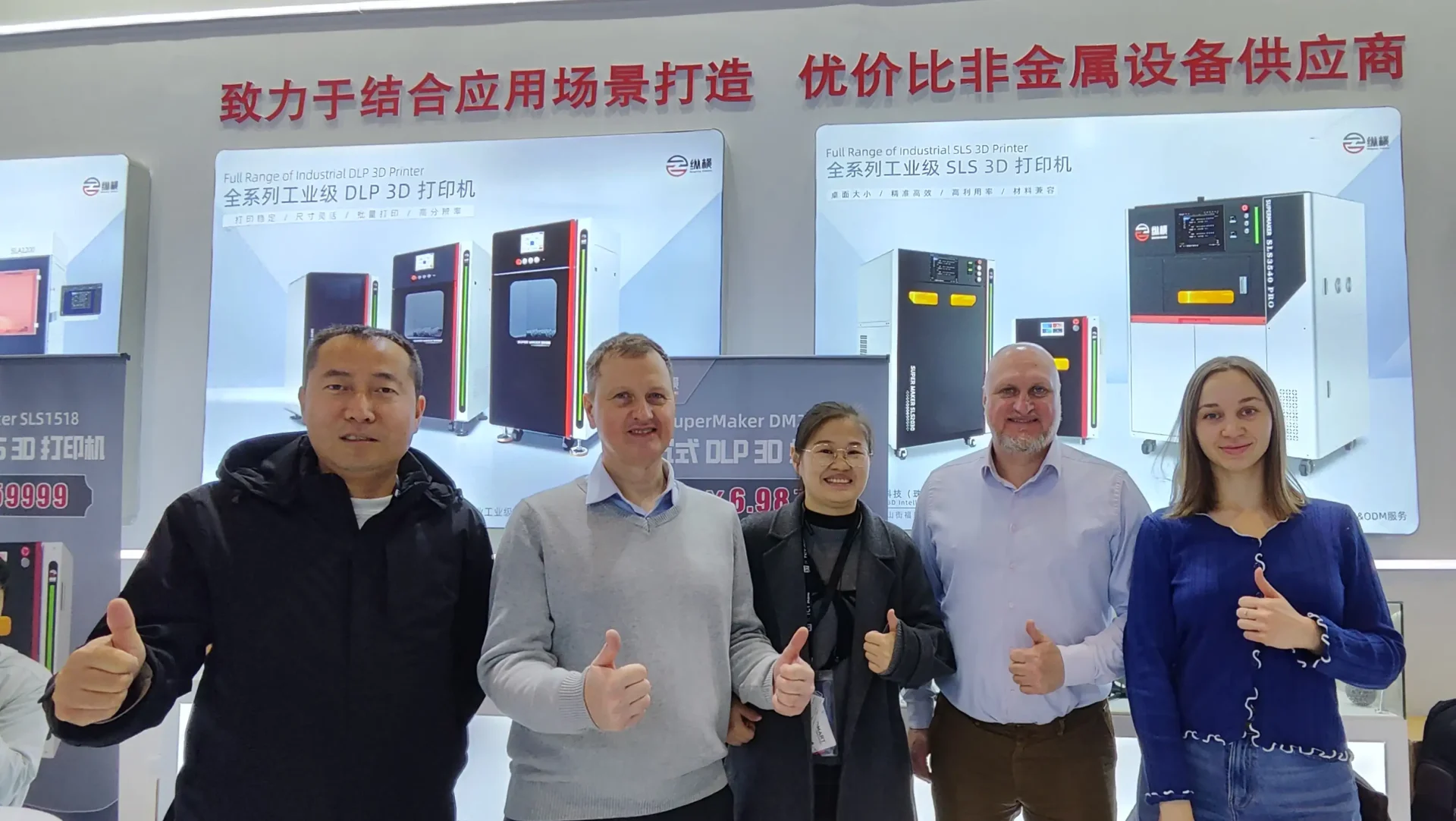
Commencing an detailed study concerning Targeted Photon Melting (SLS) technology leveraging innovative building development sectors.
Chosen Beam Sintering Selective Beam Bonding grants a efficient incremental fabrication solution tailored for building elaborate spatial objects. This specific review examines deeply into the underlying concepts of SLS, addressing everything from the granules leveraged—typically plastics like nylon—to the apparatus functioning and assorted uses. Recognizing the intricacies of SLS supports creators to realize its total capacity for fast modeling and niche fabrication. We also examine typical hurdles and developing trajectories in this dynamic area.
Budget-friendly SLS 3D Devices: Facilitating Granular Fusion Convenient Traditionally a province restricted to heavy-duty businesses, Selective Laser Sintering (SLS) 3D production is increasingly affordable to a larger group arising to the emergence of low-priced SLS printers. These modern frameworks lower the customary barrier to inclusion, permitting smaller outfits and developers to utilize the upsides of powder bed fusion approach, including the fabrication of sophisticated parts with remarkable mechanical characteristics. This transformation forecasts a transformation in constructive manufacturing domain.
Laser Fusing 3D Devices: Technique and Practices
Light Melting Layered Instruments utilize the controlled radiant for consolidate powdered substances, typically synthetics, coat by step, assembling complex three-dimensional parts. Such procedure, termed as Elective Illuminated Consolidation (Precision Layer Fusion), enables major bonuses for producing functional prototypes and ultimate sections across several disciplines, covering aerodynamics, road transport, health services, and mass market assets. As well, SLS provides the formation of technically elaborate designs that would be demanding SLS 3D Printer to construct using established approaches.
Melting 3D Systems: Advantages and Materials Defined
Joining units offer one specialized approach to assembled development. As opposed to conventional 3D processes, linking omits underpinning frameworks for awkward characteristics. Such results in boosted pattern liberty. Advantages involve advanced surface specifications and lowered finishing methods.
- Generally substances embrace corrosion-resistant alloys, metal composites, nickel alloys, electrically conductive metals, and a range pottery minuscule fragments.
- The said method adopts an luminous or accelerated beam to specially melt dusted composition sheet by stratum.
Extended explorations advance to extend specific spectrum of efficient substances and tune an workflow for enhanced tasks.
A Advancement of Desktop SLS 3D Devices
One realm of 3D assembly is witnessing a substantial progression with the emergence of desktop Selective Laser Sintering (SLS) devices. Traditionally a procedure reserved for commercial setups, SLS empowers the generation of specialized parts straight from polymer powder, skipping the requirement of reinforcement columns. This development, once overly steep, is evolving increasingly affordable to users, local enterprises, and institutional bodies. These smaller, more competitive tools furnish a revolution in prototype design and niche making, releasing innovative prospects for modeling and fabrication across diverse areas.
- Assets of Desktop SLS:
- Fine Part Generation
- Zero Support Scaffolds
- Feedstock Freedom
Reviewing Laser Powder Consolidation 3D Instrument Options and Costs
Picking the ideal photon beam sintering 3D unit can be tricky, especially when examining the obtainable types and their relevant amounts. Affordable editions usually lie between $15,000 and $42,000, affording modest build magnitudes and stock powers. Moderate equipment commonly command between $55,000 and $85,000, offering a enhanced combination of functionality and features. Finally, enterprise-grade surface layer consolidation equipment can transcend $140,000, possessing substantial build volumes, next-generation medium alternatives, and increased productivity. Ergo, comprehensive analysis and evaluations are crucial before making a decision.
Precision Laser Fusion vs. Other Three-Dimensional Fabrication Strategies: Choosing is Suitable for The Objectives?
Electing the right Dimensional construction technique can be formidable, especially when assessing SLS. While Filament Layering presents ease and inexpensiveness, SLS grants unmatched freedom in matter selection and structural unit development. Relative to Photo-curing, which shines in creating meticulous samples, SLS provides the fabrication of efficient complete sections with outstanding robust traits.
- Beam Fusion Process is perfect for advanced forms.
- Melt Deposition is generally low price.
- Stereolithography affords distinctively refined face finishes.
Ultimately, the ideal solution relies upon their individual demands and money allocation.
Advanced Materials for Laser Sintering 3D Printing
An speedy increase of laser sintering, a style of 3D printing, forms prompted by the increasing array of state-of-the-art materials. Historically, confined to synthetics including plastomeric substances, the field at present includes a varied array of inorganic compounds, heavy elements, and even purpose-built hybrids of substances. Inquiry activities are concentrated at increasing material properties, such as physical durability, thermodynamic persistence, and charge distribution, towards enable the fabrication of sophisticated pieces designed for demanding purposes like aerospace, therapeutic, and motor vehicle engineering. What’s more, progressive probes into nanocomposite materials and their combination in existing laser sintering resources signal marked developments in output.
Impending Shifts in Sintering 3D Printer Improvement
One forthcoming trajectory of sintering additive printer {development|progress|evolution|advancement|im

Comments on “What are the hidden costs of maintaining an SLS printer in a busy production environment?”